Loading
Roll over the image to zoom in
₹8,524 (Incl. of all taxes)
₹7,224 + ₹1,300 GST (18%)
MRP was MRP ₹8,810
Save 18%
2 Business Days
1
–
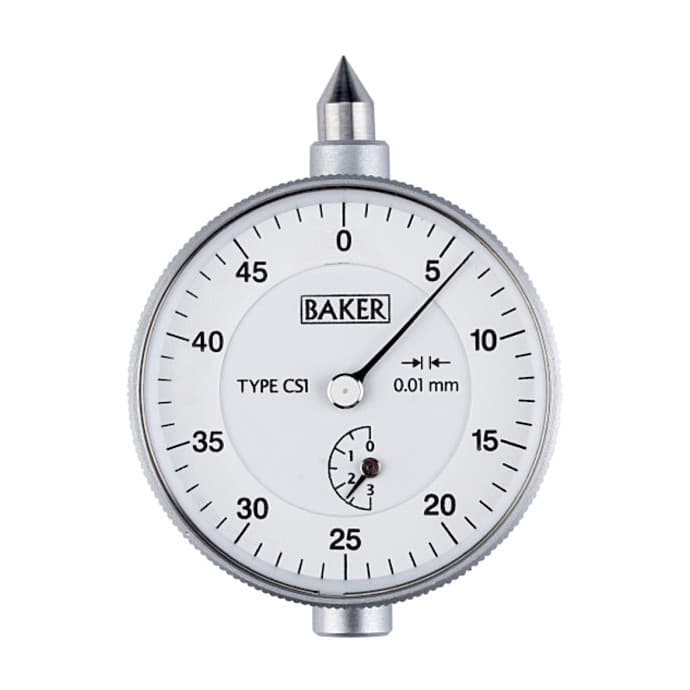
Excessive web deflection is dangerous for the engine. The cause may be faulty or damaged crankshaft, damaged bearing, poor bearing alignment, excessive bearing clearance or slackness, faulty flanging to transmission, flywheel or Vee Belt pulley, etc.
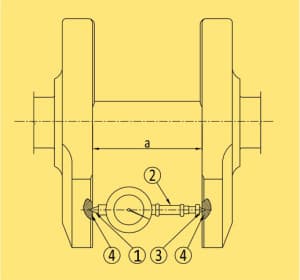 Determine the distance (a) between two Webs. Assemble the extension (2) and fixed gauging point (3) and screw this assembly into the threaded bush of the dial gauge unit opposite to live point (1). Overall length from tip of fully extended live point (1) to tip of fixed point (3) should be about 1 to 2 mm greater than web distance (a) |
| The back of the dial Gauge unit takes the balance weight to keep the dial facing upward while the Gauge is suspended between the webs during Crankshaft rotation. Use center bush for horizontal upward position and outer bush for inclined upward position. Without balance weight, the indicator adopts a face down position |
| Place the Gauge between webs of Crankshaft so that gauging points are located in punch holes (4), center punched where measurement of deflection is required. First, place spring loaded live point (1) in one of the two punch holes (4), then locate fixed point (3) in other punch hole |
| Set dial pointer to 20 on (metric) dial by rotating the indicator bezel. Turn Crankshaft by hand & observe pointer movement on dial |
| Read deflections at various positions of the crankshaft revolution as set out in manufacturer’s inspection procedure |
| Type of Product | Crankshaft Gauges |
|---|---|
| Range (Inches) | 2.4 - 23.6 inch |
| Reading | 0.0005 inch |
| Graduation | 0 - 20 |